lenatriestounderstand

Section 8 of 9

Econometrics

Endogeneity, IV, RDD, panel data, causal ML.

15 items in this section.

Long reads

01

Endogeneity

Endogeneity — what it is formally, why OLS becomes biased and inconsistent under it, the three main sources (omitted variables, simultaneity, measurement error) plus self-selection, how to detect it in practice, and why this is the central problem the rest of the Econometrics track is built around.

  • endogeneity
  • causal-inference
  • ols
  • ovb
Read
Updated Oct 25, 2026
02

Instrumental Variables (2SLS)

Instrumental Variables / 2SLS as the foundational tool for causal inference in observational data when the treatment is endogenous — the IV idea in plain terms, the four conditions a valid instrument must satisfy (relevance, exclusion, independence, monotonicity), the two-stage estimator, weak-instrument diagnostics beyond the F>10 rule, what IV actually identifies (LATE, not ATE), and worked instrument choices for pricing problems.

  • iv
  • 2sls
  • causal-inference
  • late
Read
Updated Jun 7, 2026
03

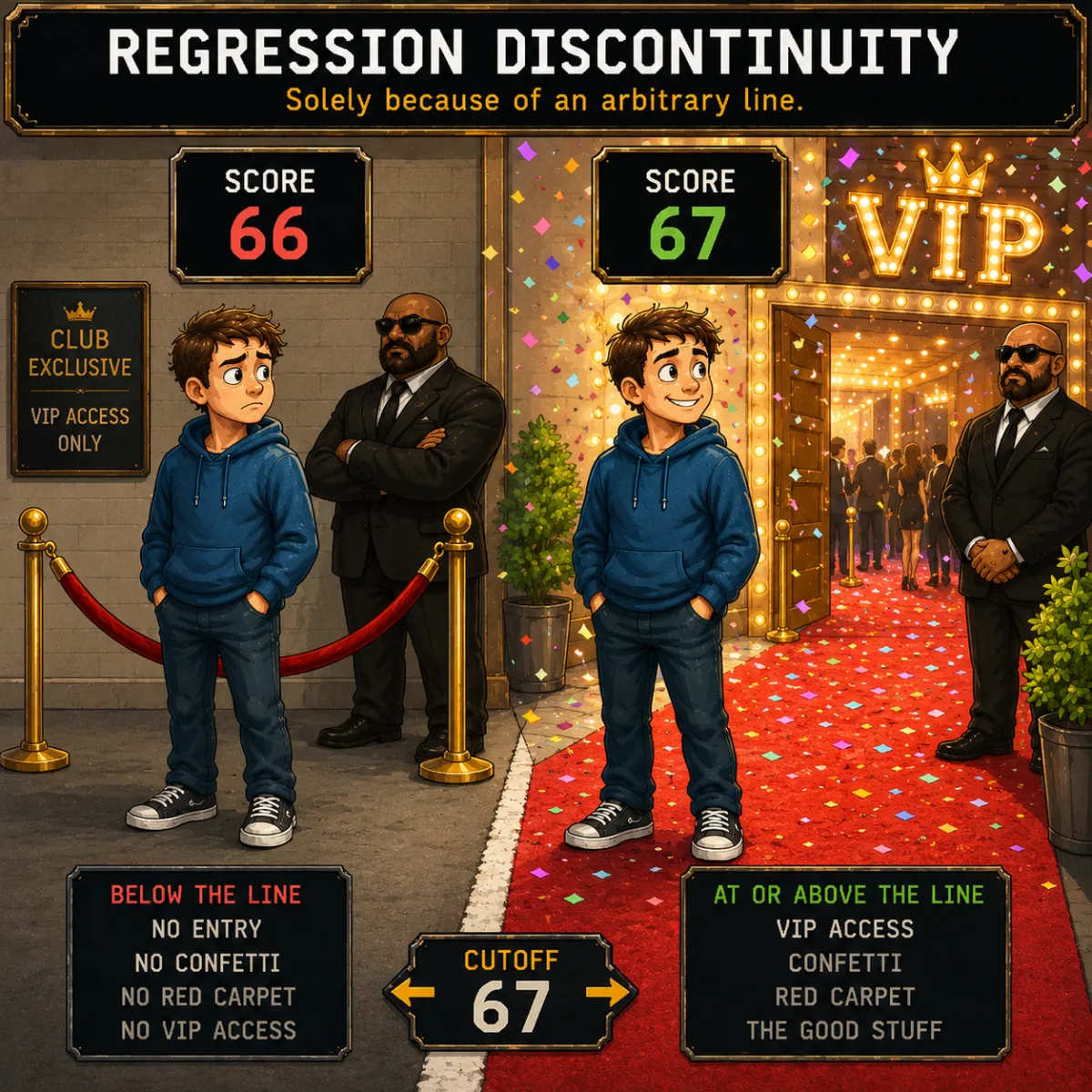
Regression Discontinuity

Regression discontinuity as a quasi-experimental method built on a threshold-based assignment rule — the continuity assumption that does the identification work, sharp and fuzzy variants, the modern bandwidth and diagnostic toolkit, and why the resulting effect is local to the cutoff rather than population-wide.

  • rdd
  • causal-inference
  • quasi-experiment
  • late
Read
Updated Oct 25, 2026
04

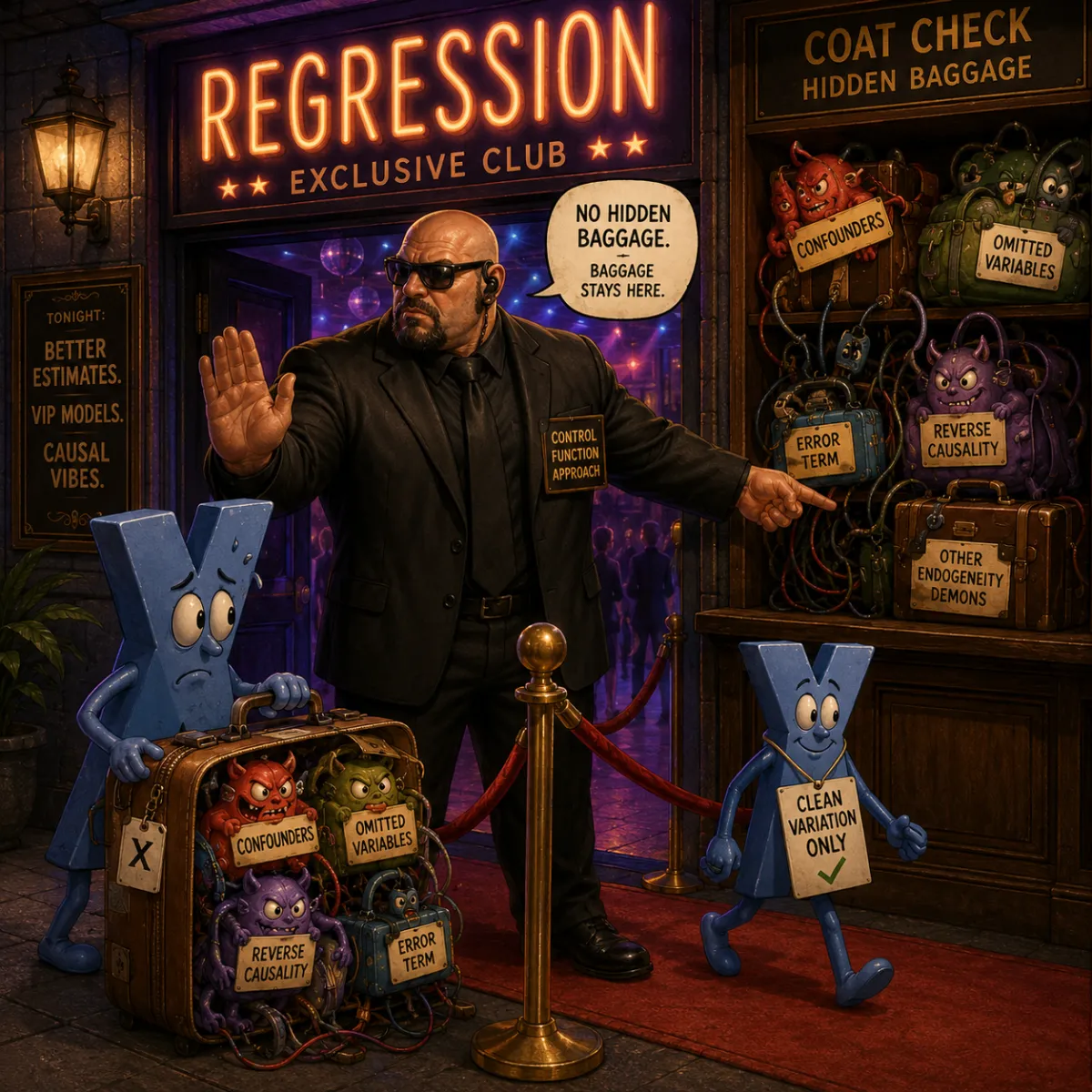
Control Function Approach

The control function approach as the residual-based alternative to 2SLS — when the two agree, what CF's structural assumption actually is, where an ML-flexible first stage helps and where it does not, and how the idea extends through cross-fitting into double / debiased machine learning.

  • causal-inference
  • iv
  • ml-econometrics
  • double-ml
Read
Updated Jun 7, 2026
05

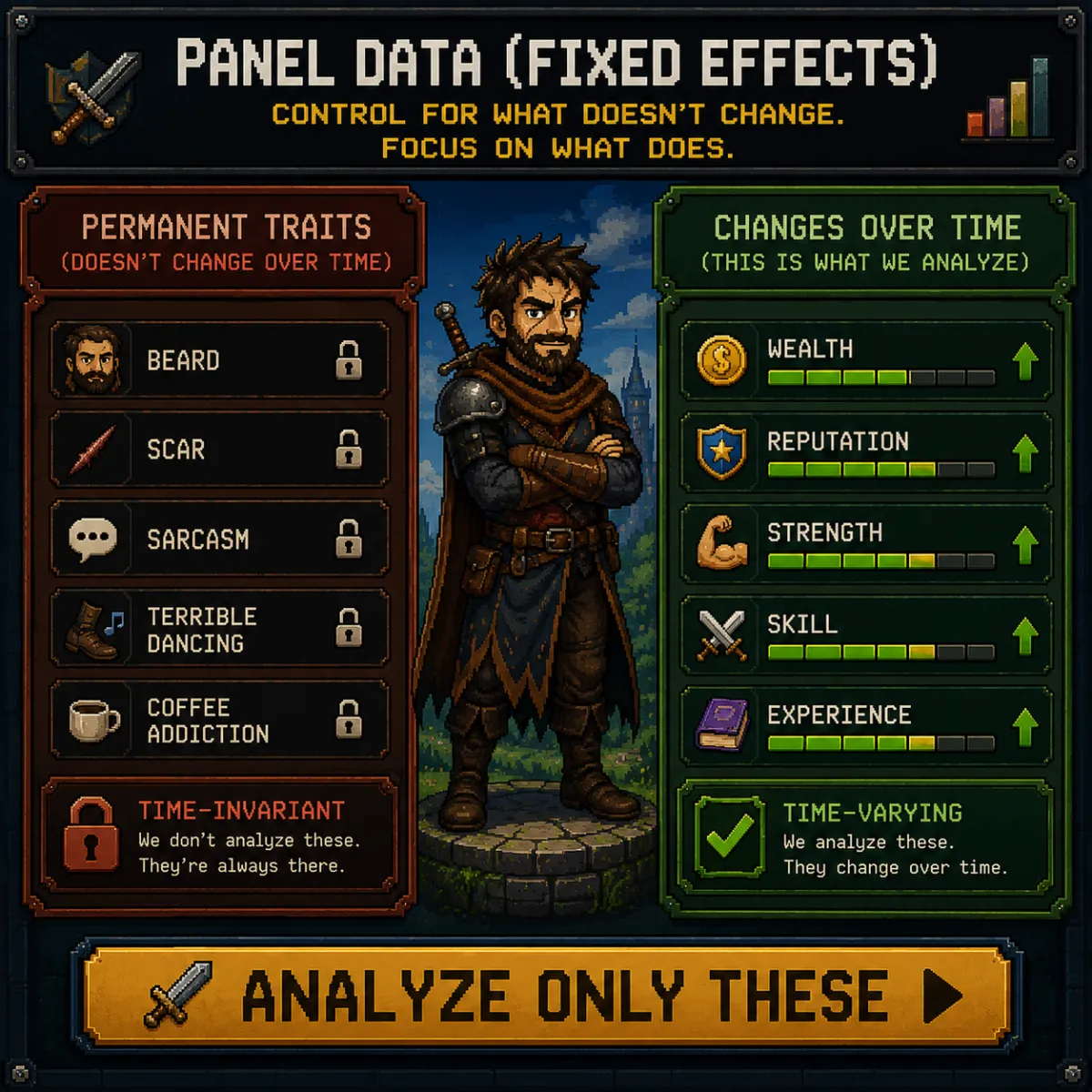
Panel Data (Fixed Effects)

Fixed effects for panel data — the within-transformation, what it controls for and what it misses, cluster-robust standard errors, the LSDV equivalence, the staggered-DiD problem, and when FE is the right tool.

  • fixed-effects
  • did
  • panel
  • causal-inference
Read
Updated Jun 7, 2026
06

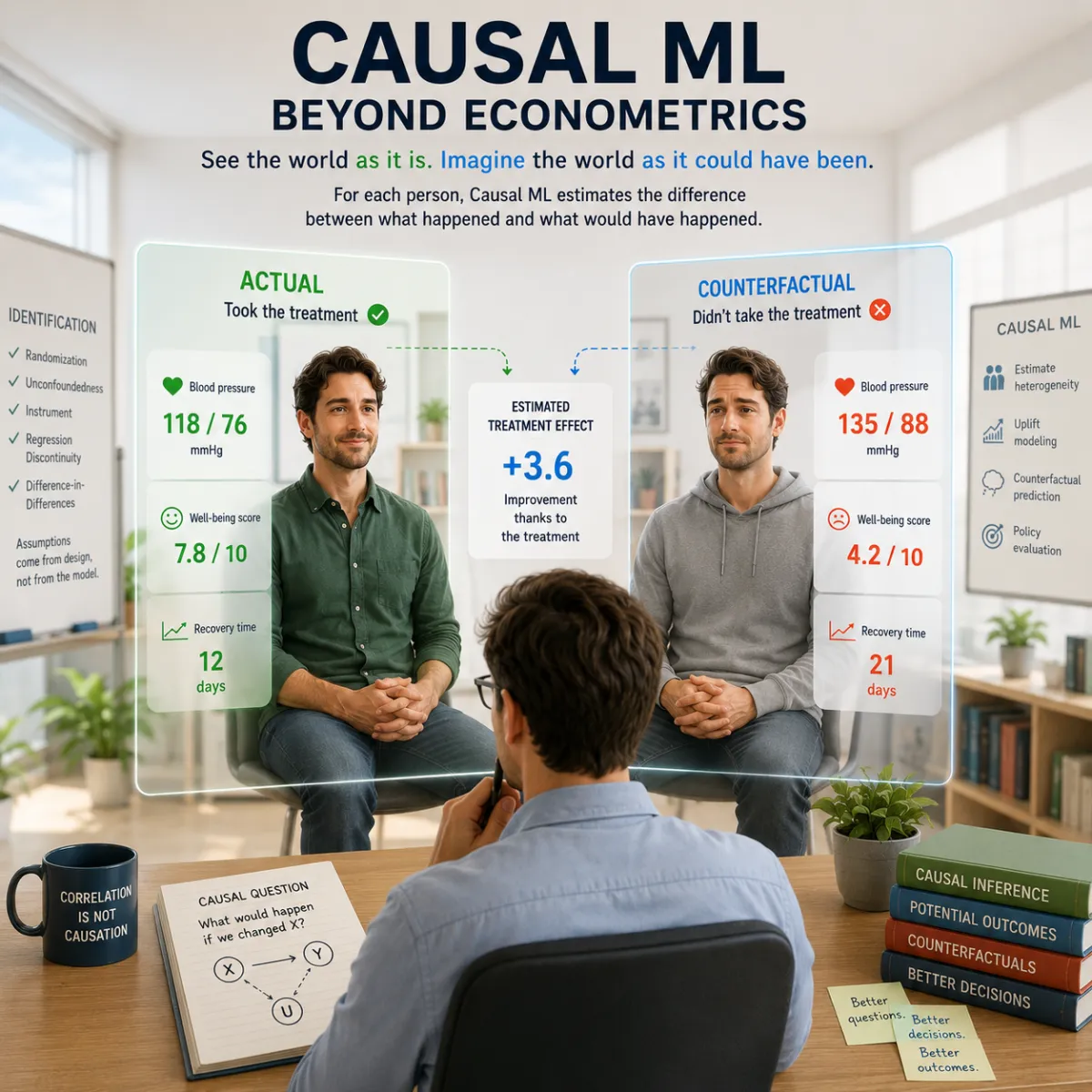
Causal ML Beyond Econometrics

Causal ML at the meeting point of econometrics and ML — ATE vs CATE, uplift modelling, DML and orthogonal-moments inference, causal forests, counterfactual prediction, off-policy evaluation, and the standard mistakes from treating predictive models as causal.

  • causal-ml
  • uplift
  • dml
  • cate
Read
Updated Jun 7, 2026
07

Pricing and Elasticity

Pricing as the worked-example for the Econometrics track — why price is endogenous, the identification strategies (IV, FE, RD, DML, CATE), cross-price elasticity and cannibalization, and what-if analysis with its constant-elasticity caveats.

  • pricing
  • elasticity
  • demand
  • causal-inference
Read
Updated Jun 7, 2026

Shorts

Shorts

Endogeneity: The One Assumption OLS Quietly Needs

Run a regression on anything and it hands back a number. That number is the causal effect only if the regressor and the error term don't move together. Endogeneity is the name for that assumption breaking — and why more data can't fix it.

  • econometrics
  • endogeneity
  • causal-inference
  • ols
  • +1
Read
Oct 25, 2026
Shorts

Exogeneity vs Endogeneity (and What "Strict" Adds)

Two words that sound like heavy jargon but name one yes/no question: does your regressor move with the error term? Clean is exogenous, contaminated is endogenous — and 'strict' just extends the question across time.

  • econometrics
  • exogeneity
  • endogeneity
  • strict-exogeneity
  • +1
Read
Oct 25, 2026
Shorts

Instrumental Variables and 2SLS, on One Page

If your regressor is contaminated, borrow a clean source of variation that pushes it around. That borrowed lever is an instrument, and two-stage least squares is the machine that uses it.

  • econometrics
  • instrumental-variables
  • 2sls
  • causal-inference
  • +1
Read
Oct 25, 2026
Shorts

Panel Data and Fixed Effects, on One Page

Watch the same units over time and you get a free superpower: you can subtract away everything about a unit that never changes — including the confounders you can't even measure.

  • econometrics
  • panel-data
  • fixed-effects
  • within-transformation
  • +1
Read
Oct 25, 2026
Shorts

Regression Discontinuity: A Causal Effect at a Threshold

A cutoff nobody chose for your benefit — a passing score, an income line, an age limit — is a natural experiment hiding in plain sight. Just above and just below the line, units are near-identical except for the treatment.

  • econometrics
  • regression-discontinuity
  • causal-inference
  • rd-design
  • +1
Read
Oct 25, 2026
Shorts

The Control Function: The Residual Trick Behind 2SLS

Two-stage least squares replaces the dirty regressor with a clean copy. The control function does the opposite — it keeps the dirty regressor and adds one column that soaks up the dirt. In the linear case they land on the exact same number.

  • econometrics
  • control-function
  • 2sls
  • instrumental-variables
  • +1
Read
Oct 25, 2026
Shorts

Price Elasticity: Why You Can't Just Regress Quantity on Price

Elasticity is the percent change in quantity per percent change in price. It looks like one tidy regression of quantity on price — and that regression is wrong in the exact direction that costs you money.

  • econometrics
  • price-elasticity
  • pricing
  • endogeneity
  • +1
Read
Oct 25, 2026
Shorts

ATE vs CATE: When the Average Effect Hides Everyone

The treatment lifts conversion 3%. For whom? An average is one number, and a single number can't tell 'helps everyone a little' apart from 'helps half a lot and quietly harms the rest.'

  • causal-inference
  • ate
  • cate
  • uplift-modeling
  • +1
Read
Oct 25, 2026